






Photos by Banning Eyre
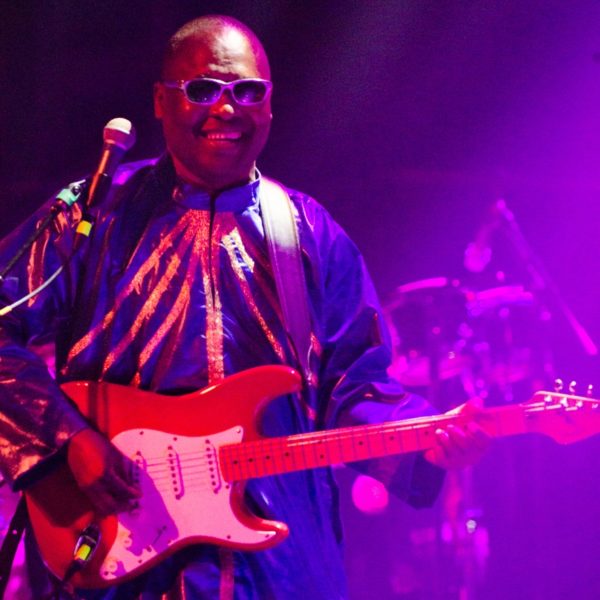
When Malian singer Amadou Bagayoko fell sick this past spring, those around him assumed he would recover. “C’est le palu.” “It’s malaria,” he told one acquaintance, not an uncommon affliction for a West African. Alas, the ailmend was more serious than anyone knew, and Amadou passed away on April 4 at 71 years of age, way too soon for one so alive, vigorous, and of course, beloved around the world. For a time, it was unclear what would happen with the live act Amadou and Mariam. They were on the verge of releasing their latest album, L'amour à la folie, “madly in love,” which he and Mariam most definitely were, ever since their marriage in 1980. A tour was scheduled. It fell to Mariam to take a decision. After a period of mourning, she made her call. The show would go on.
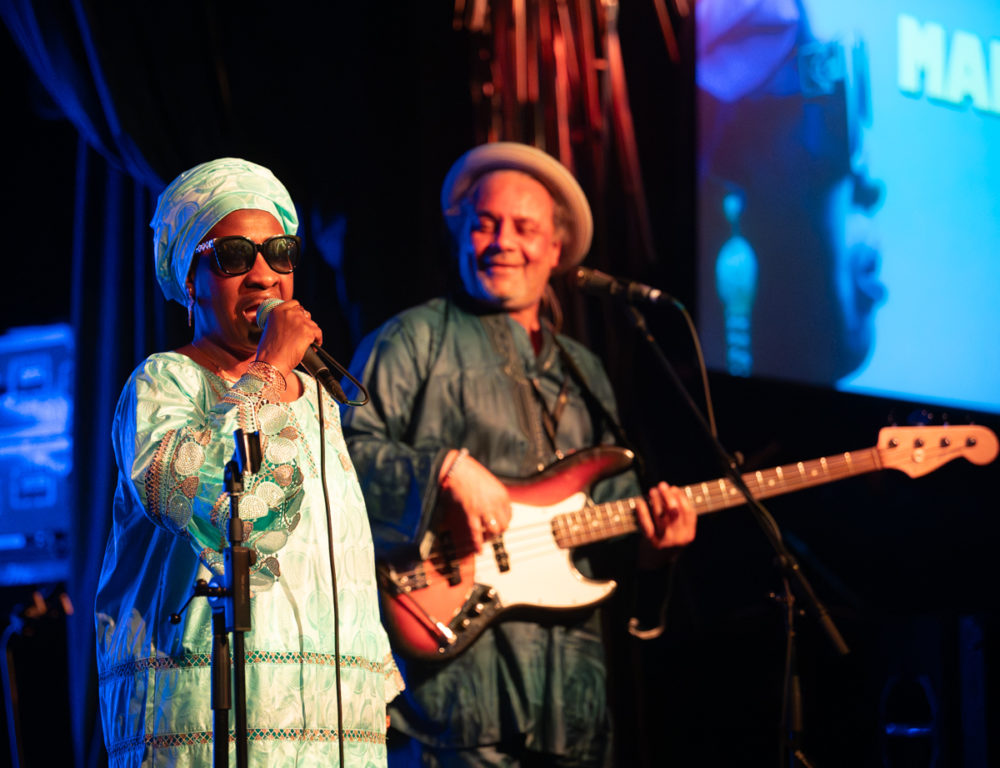
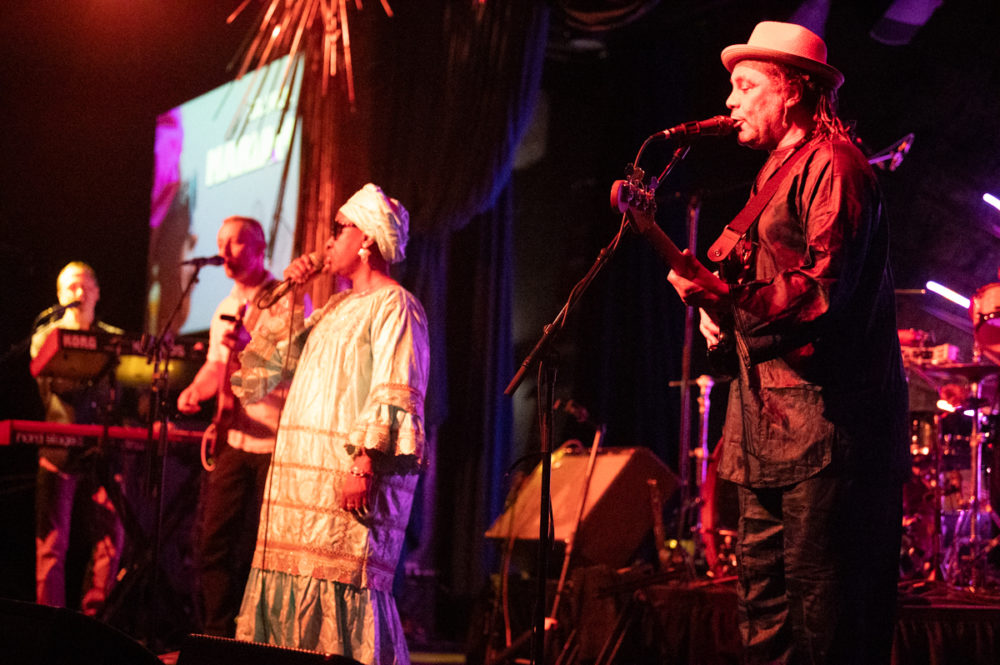
So it was that Mariam and a four-piece backing band mounted a seven-date North American tour in November. Afropop Worldwide caught the last show of that tour, presented by the World Music Institute at Sony Hall in New York City on November 18. For this longtime fan, it was something of a revelation.
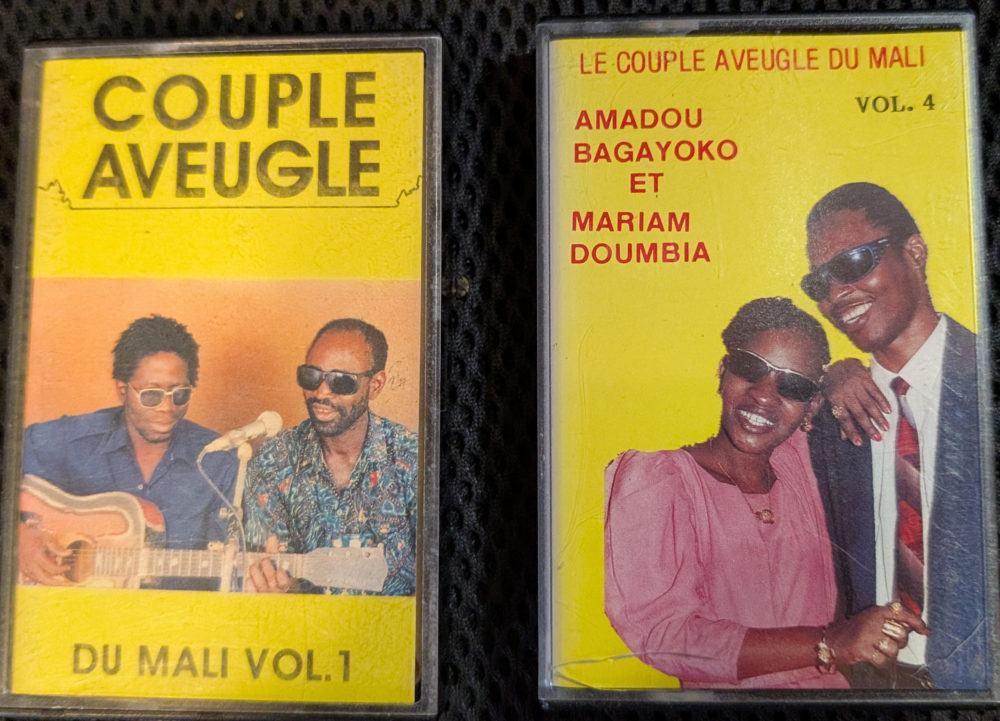
I first encountered Amadou and Mariam when I was buying music at a cassette stand in Bamako in 1993. The vendor insisted I add in two cassettes from Le Couple Aveugle du Mali (the blind couple from Mali), a rather clunky name that was dropped once eagle-eared French music producers took notice and fueled the couple’s path to world stardom. Their sound drew on the pentatonic Bambara music that both artists grew up with, but also plenty of rock influences, mostly coming from guitarist Amadou’s side. When I interviewed Amadou for Guitar Player Magazine in the early 2000’s, he told me about his formative years playing rock covers, and then building on those chops during his time with Les Ambassadeurs du Motel, alongside Salif Keita, in the late 1970s.
One of the more memorable Amadou and Mariam gigs I caught over the years was their joint tour with the Blind Boys of Alabama, an inspired pairing that I hope someone recorded. But coming to the present, I hardly knew what to expect from a concert with just Mariam, but was thrilled to find her in fine voice, good spirits, and backed by a marvelous quartet of musicians. Charlie Avot on keys and Yvo Abadi on drums pumped out lean and mean grooves, grounded in fantastic, funky, often polyrhythmic bass playing from a most animated Yao Dembelé, a longtime veteran of the A&M band. On guitar, stepping into Amadou’s rockin’ shoes, was an old friend of Afropop’s, Sam Dickey.
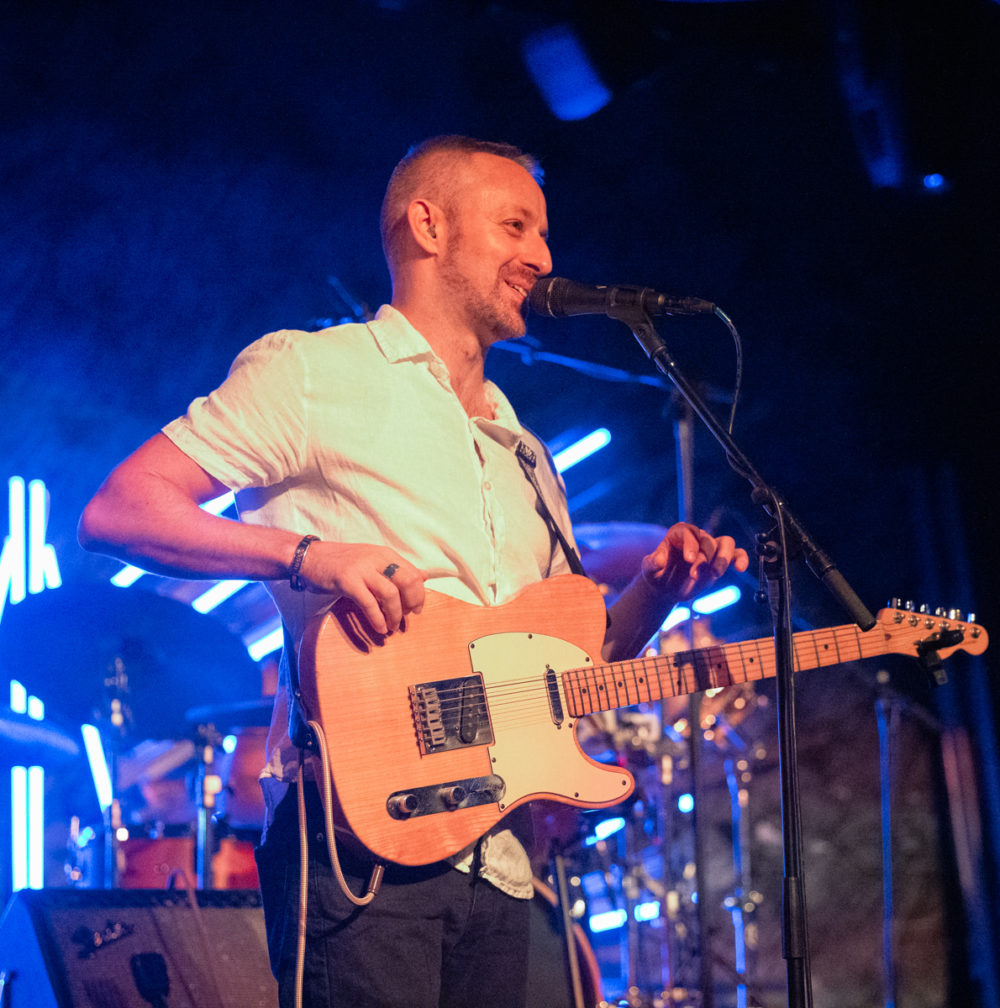
Sam’s is a story for another day. In short, this California native spent part of his childhood in Burkina Faso, was able to learn Malian songs from records as a teenager, traveled to Mali multiple times, founded an excellent band, Benyoro, in New York in the 2000s, moved to New Orleans and wound up recruited first on bass with the A&M band, and then on guitar and as musical director with Fatoumata Diarara. Currently based in Paris, Sam stepped up admirably at the show, spinning out guitar solos that merged Bambara boogie and rock influences very much as Amadou might have done, and with considerable showmanship. Charlie, Yao and Sam all sang, filling in Amadou’s vocal parts on a succession of A&M hits, including the one that first broke them internationally, “Je Pense à Toi (I Think of You).”
In an interview, Amadou once said of Mariam, “Her lyrics touched me because they reflected her sadness and the hypocrisy with which society often treats disabled people.” That melancholy edge remains, but now tempered by the evident joy Mariam receives from her loving audience. She has now scheduled more tour dates.
Amadou is gone, but Mariam seems more than ready to carry the torch forward for a good long time to come. And thank God for that.
Here's a short video clip from the NYC show...
Related Audio Programs
Related Articles