





It’s that time of year when New York City turns sharp and bright—when the temperature drops, the days get shorter, and the holidays sneak up on you. If you’re lucky, you’ve still got an old stereo system: the kind where you lower the needle onto a vinyl 45 or LP and the room instantly changes. Maybe the record is Louis Armstrong’s “What a Wonderful World.” Nostalgia settles in—not because the past was peaceful, but because the song somehow brings peace anyway.
As the year winds down, you start to take stock: what shifted, what survived, what you’re still trying to protect. And you hope that certain moments—certain voices—will still be there for your children to discover in their original form. Louis Armstrong, the original jazz ambassador, is one of those voices.
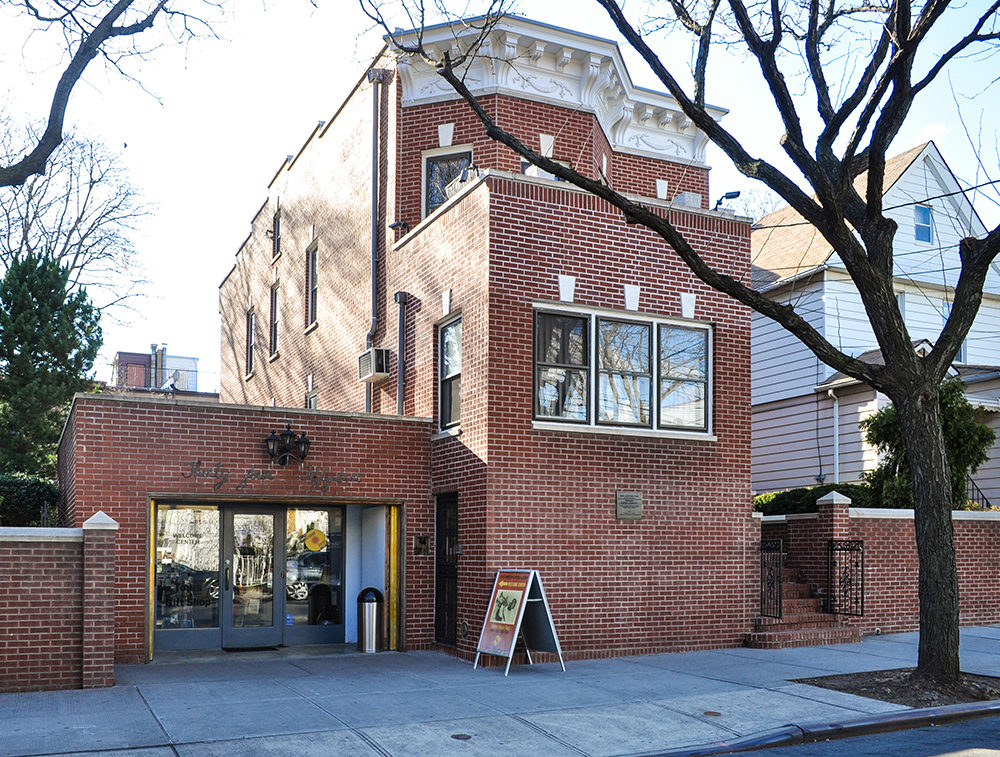
For Afropop Worldwide, I sat down with Regina Bain, Executive Director of the Louis Armstrong House Museum in Corona, Queens—an institution rooted in the landmarked home where Louis and his wife, Lucille, lived for three decades. Bain is leading an ambitious strategy that reaches beyond preservation into living culture. Her plan is to widen the museum’s reach without losing the intimacy of the house itself: to preserve Armstrong’s legacy through guided tours of the historic home, deepened by ongoing archival research; to pursue artistic excellence by presenting performances and commissioning new work from contemporary artists in dialogue with the archive; to expand education through onsite, online, and classroom experiences for K–12 students, including hands-on instrument learning; and to strengthen community through exchanges built for mutual learning and support, from justice-arts programming to practical workshops on housing and local life.
She wants to connect the programmatic vision to a fundraising strategy that increases annual income and also moves major preservation and capital efforts forward. This involves constructing a new, 14,000 sq. foot, 26-million-dollar education center with a performance space, archive facility, and a multimedia exhibition venue, all while preserving the historic home, Armstrong home and the Armostrong Archive, the largest of any single jazz musician.
Bain is leveraging a 3-million dollar investment by the city of New York to begin the renovation of Selma’s Place, the donated home of Selma Heraldo, next door to the historic Armstrong house. She is also curating the museum’s new Global Ambassadors Program, including traveling with the U.S. State Department to Manama, Bahrain, to present on the power of art and culture in diplomacy, and the Armstrong in Ghana initiative of exhibition and programs.
With their recent NEA cut, but with help from a progressive new mayor, we hope she will be able to reach the milestone. Afropop Worldwide is spotlighting this unique institution that began with Louis Armstrong and his wife Lucille. If you’ve got time, take a trip up to Queens and wrap yourself up in that era—and try not to forget the home, the archive, and the public tours that keep the story alive.

Mukwae Wabei Siyolwe: Regina, are you in Accra?
Regina Bain: No. I just got back yesterday.
Oh my goodness. You must be tired?
I feel great.
I didn’t even know Louis Armstrong had a museum in Queens, to be honest. Is it a well-known thing? Is it just me? Is it my ignorance?
It’s somewhat of a well-kept secret. We’re trying to change that. Of course, he was born in New Orleans, but many people don’t know that he lived for 30 years in a now landmarked home in Queens. And that’s because of his wife, Lucille. She’s the one who bought that house. She was from that community, and she made that home.
So how do you like your new role? How did that even happen? Was there a connection there?
I have been in the arts for a long time and was working in college access and education. I wanted something that brought together art and education, and for me, that is the Louis Armstrong House Museum. A friend of mine, Dax Devlin Ross, let me know about the work he was doing with the museum. And that’s how I came to learn more about it. So I started in the midst of the pandemic in August, 2020. That was a huge leap of faith. The Corona Queens was the epicenter of deaths in New York at the time. So there was a lot happening in our community, but we were able to move through it and be where we are now five years later.
Did you live in Queens yourself?
No, I was new to that community, so there was a lot I needed to learn. It’s been a thriving community for a very long time.
Did Queens even have a jazz scene or did everybody go to Harlem?
Queens most definitively did, so this is a lesser-known fact as well. When people think of jazz in New York, they think of Harlem, but Queens was also a hotbed of jazz, specifically because it was a place that jazz musicians could own a home. They could have a house as opposed to staying in the hotels in Harlem and in smaller places in Harlem. They could have a house with space. Count Basie had pool parties where all the jazz musicians would come over. Dizzy Gillespie lived around the corner from Louis Armstrong. There’s a whole map called the Queens Jazz Trail that Flushing Town Hall commissioned in the ‘90s that tells the story of these prolific jazz musicians living in Queens. Queens is jazz, most definitely.
Well, jazz is everywhere. It’s American. It’s Pittsburgh, it’s New Orleans..
Yes. Thank goodness it’s everywhere.
So tell me more about the museum. What was the inception? You said that his wife turned their house into a museum. Where did the funding come from from that?
Louis and Lucille, before they died, instituted something called the Louis Armstrong Educational Foundation. It was their estate. So they had a plan for themselves and what their legacy would be after they died. And this foundation they put together was meant for education and to further that legacy. Louis died in 1971, Lucille died in ‘83, and they had a plan together so that in Lucille’s will it said, “When I die, the home is donated to the city of New York. And I want the city of New York to make this into a museum.”
So the city of New York worked with the City University of New York, and with Queens College, to make this a museum. It took years, but it finally came to be. And in 2003, the home opened for public tours.
So the funding comes from a lot of different places. Initially, definitely the city of New York, the Louis Armstrong Educational Foundation, but now we’re a nonprofit called the Louis Armstrong House Museum. We get donations from individuals, and we do foundation and government grants at every level.
What’s your vision as the new executive director? Where do you want to take the organization? What’s your dream?
This is “Armstrong Now.” Louis Armstrong is an icon, a global icon in our history, but he’s also of the now. So it’s about making sure that the people who are making music now, who are making the culture now, know about this history, because it’s theirs and can use it in their own lives, their own contexts, and push it into the future.
So what does that looks like? It looks like education programs for students. It looks like something called the Armstrong Now Artist in Residency Program, where contemporary artists can apply to be in residence and work with our historians. Then they create new works. These are multidisciplinary artists, musicians and dancers, who come into the archive and say, “This piece of the story resonates with me and who I am as a person and an artist. So I’m gonna create from this space.” It is about thinking about our community and Corona Queens and making sure we’re recording the history, the oral history of the people in our community that they can then share with their children. This is intergenerational programming into the future, and of course, it is global. Armstrong traveled to 65 countries.
.He traveled throughout the African continent and we wanna travel in his footsteps. We’re starting with Armstrong in Ghana, a multinational exhibition happening in Accra and in New York in 2026, 2027.
So this is when the civil rights movement in America was strong. The independence movement in Ghana, of course, was strong. And so how did all that come together when Armstrong visited Ghana in 1956? That’s the story we’re trying to tell. And then what does that mean for independence and freedom today? So that’s the work we want to do. It’s about Armstrong now and into the future.
I just got chills on that one. I was a producer for Jazz at Lincoln Center, the Rhythm Road Tour, and he was the first African American, well, he was the first Rhythm Road Tour artist to leave the United States and represent the U.S. as American music, America’s classical music. I just love all that history, all those images of him and his wife at the Pyramids of Giza. Just stunning. So I’m really excited about this program you’re curating.
Image of Armstrong and his wife Lucile at the Pyramids of Giza, Cairo Egypt, 1961
Yes, I just came back from Accra, meeting with artists there. We had a concert at Plus 233 Jazz Club. We worked with the Nubuke Foundation. We met people who actually remember seeing Louis Armstrong when he came to visit. They were young, they were eight years old, but they have the memory, and we preserving that memory through the oral history we’re building for the exhibition.
That’s brilliant. Give me a rundown of your favorite Louis Armstrong songs so I can lace them into the story. What’s your story connected to that particular song that you’re going to talk about?
There ares so many. Of course, there’s “West End Blues.”
“West End Blues” is one of those songs that people don’t know that they know it. They know “What a Wonderful World” because so many artists have covered it. Some of them have also heard the story that when Armstrong sang that song, he used to think about the kids in his community. And we’re actually doing a new exhibition that opened in October of this year. It’s about the kids of the community, the ones he sang about in “What a Wonderful World” and their stories.
If you come to 107th Street in Queens from now through next spring, you’re going to hear and see that exhibition. So I love “What a Wonderful World.” I also love “West End Blues.” That was a song that was featured in the work of Pina Bausch, an amazing German choreographer. So many people know the song, but they don’t know it’s Louis Armstrong. And then one of my personal favorites is “St. James Infirmary.” It is a darker song. It has dark humor to it, but I think it’s absolutely gorgeous. There are two versions of it. I like the latter version best.
Another funny thing about Louis Armstrong is that he was adopted by this Jewish family and was given a trumpet. He spoke Yiddish; he sang in Yiddish. I just find that he’s such a complex, rich human being that I don’t know why a movie has never been made about him. That surprises me.
I have to correct something. There is this story that’s been circulating on social media about him being adopted, about him speaking Yiddish, and that is actually not true. It is not true.
Thank you for correcting me on that one.
But it does come out of a truth. There is a family, the Karnofsky family in New Orleans. When Louis Armstrong was very young, they sold coal and he would work with the coal cart when he was very young. He’d blow the bugle to let people know that the coal cart was coming by. So he worked for the Karnofskys, and he wrote about them.
He wore a Jewish star around for the rest of his days in honor of his memories with the Karnofsky family. But they didn’t adopt him. His mother and grandmother were definitely there and centered. He didn’t speak Yiddish, but the Karnofsky family was important, and actually, a descendant of the Karnofsky family, Ken Karnofsky, made a donation of trumpets that has helped us launch a trumpet learning program for kids in our community. We now teach students age eight to about 14 how to play the trumpet because of that donation from the Karnofsky family.
Very good. I’m so glad you straightened me out on that one because it’s definitely all over the internet. You might have to do a public service announcement on that one, because something like this is going to correct that misimpression. So how long have you been in your position?
Five years. Mm-hmm. I know the pandemic changed our sense of time, but I started in August of 2020.
Five years already. What do you think you’ve brought to the organization that’s making it better?
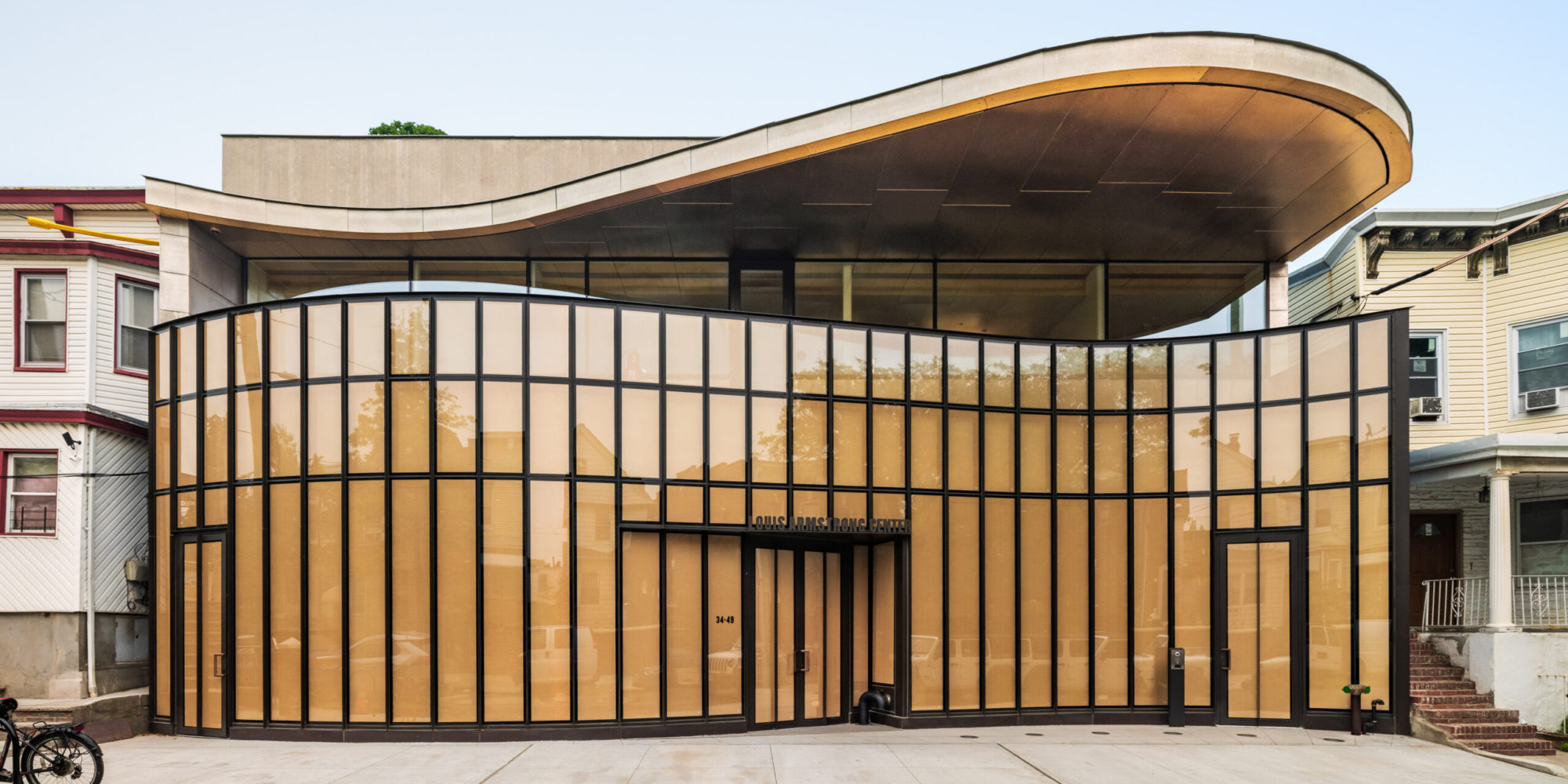
Well, it was pretty excellent before, I have to say. The legacy is strong and the people who have been shepherding the legacy are dedicated, thoughtful and thorough. What’s changed is we have this beautiful building that had been in process for literally 25 years.
There was an article we found from 1999, and it said across the street from the historic house, land has been purchased. And on that land will be built the new Armstrong Center, which just opened in 2023. So it took from 1999 to 2023 to make it happen. But it’s allowed us to do much more programming than we did when we were just the historic house. It’s allowed us to have a 75-seat jazz club so we can have performances. And we have, we had 26 concerts last year. It has the multimedia exhibition from our archives and now houses the archive, but the archive is also digitized so anyone around the world right now can go to our website and access the archive. Those things have allowed us to dream bigger and have more space to literally walk into. And so that’s been really, really fun.
I think there’s a bit of a renaissance in terms of archiving African-American arts and culture. For example, the Studio Museum is just about to open their new facility as well. The Billie Holiday Museum is there. There’s this beautiful kind of renaissance that’s happening. Would you say the Louis Armstrong Museum is part of that new vision for remembrance and reclamation of African-American history as part of American history?
Most definitely. Black arts persist and resist and move on. Sometimes we’re supported and sometimes we are not. But we are always there. And I love that we are in a moment that’s coming out of a great deal of support, resource support that happened years ago to now manifest in these new buildings, these new programs that have come forward.
The challenge now is to continue to invest resources–financial resources, time resources–so that the things that are now manifesting don’t drop away. But no matter what, we persist. The stories continue as they have for centuries and that will not change. So I’m excited to be a part of the continued story. The network we are a part of is a gift.
Absolutely. The current situation of erasure of African-American presence education, even in athletics, is mind-boggling to me. So it’s nice to know that there’s good leadership in institutions like yours where the memories of these incredibly brilliant artists can be sustained and maintained.
We tell the story. The story is in our bodies. The story is in our voices. The stories are online and we will make sure the stories are in our homes and in our institutions. We tell the story and that will never end.
I’ll tell you my one memory of Louis Armstrong. I lived in Tudor City, in New York City, when I was about four or five years old. My family were Africans who came to the U.S., the first Africans who were representatives at the UN. I think we had parties, because I remember Louis Armstrong music always playing in our apartment in 1968. I’m telling you, my father literally put us to bed with Louis Armstrong. all through my childhood.
So it’s just such a pleasure to speak to you and to remember what an icon he is for the American psyche. You know, he is Christmas songs. He is just everything in terms of our rites of passage. Louis Armstrong is always in the mix somewhere.
I deeply appreciate that memory you just shared, that Louis Armstrong is a part of so many people’s sense of family and memory. We think about Louis Armstrong’s legacy as a musical legacy. I want to also think about him as a cultural legacy and who he was as a person and as a man. Legacy matters, and I’m so thankful that he’s been a part of so many people’s lives and will be moving forward.
Thank you so much, Regina. You’re amazing. All the best.
Related Audio Programs
Related Articles