





In pre-colonial Morocco, Blad as-Siba [“The Land of Anarchy”] referred to those parts of the country, especially in the mountains and deserts, where the Sultan’s tax collectors did not reach. In the early 20th century, this cultural distinction became formalized in a savage colonial economy; French administrators conceived of these regions as Maroc inutile (“useless Morocco”), and consigned Blad as-Siba’s primarily Amazigh (“Berber”) inhabitants to rural poverty. This structural and economic marginalization persists into the present day. This year, as Moroccan officials pump billions into World Cup stadiums and high speed rail in the country’s coastal urban corridor, pregnant women continue to die in rural areas that lack access to basic medical services.
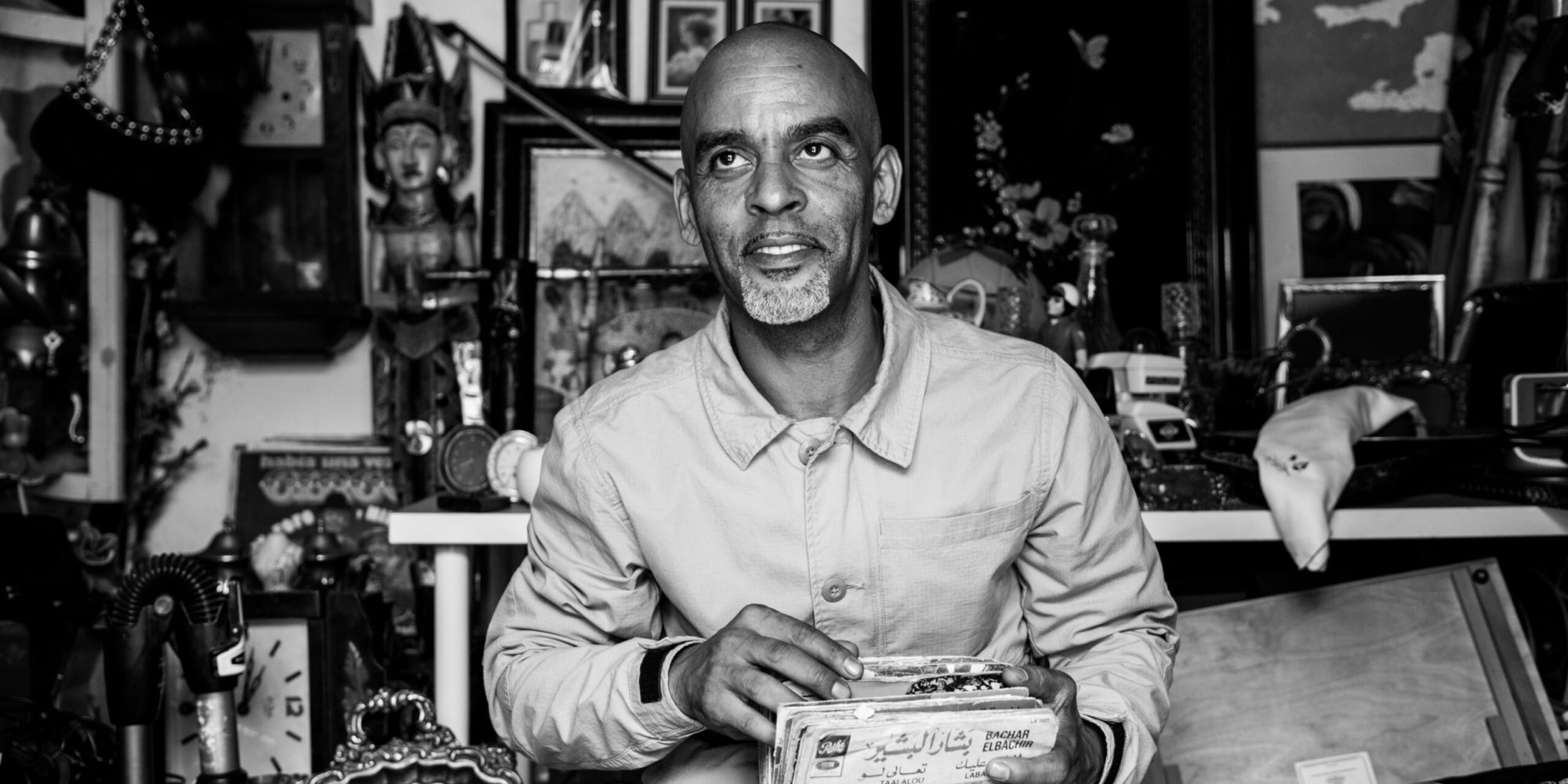
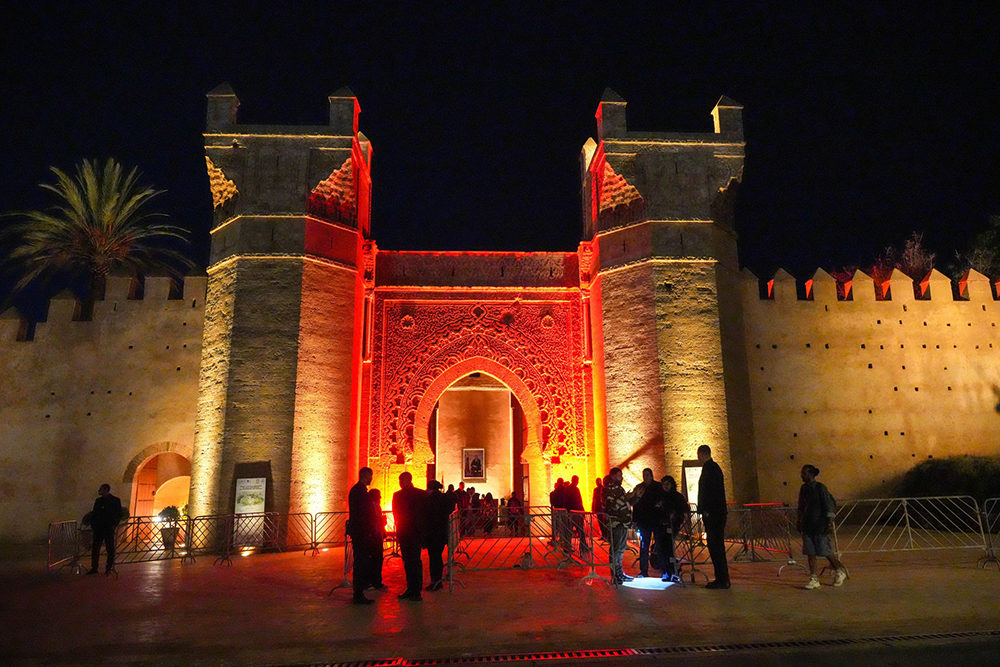
In a Wednesday night DJ set as part of Rabat’s Visa for Music festival this November, Aziz Konkrite staged a sonic rebellion against this brutal history. With his project Siba Sawt System [“Anarchy Sound System”], the Franco-Moroccan producer mixes samples from the historic music of Blad as-Siba with contemporary electronic beats. On a dancefloor set amid the Roman ruins of Chellah, Aziz took listeners on a cutting-edge journey through Moroccan folk music which kept the small but devoted audience dancing into the early hours of the morning.

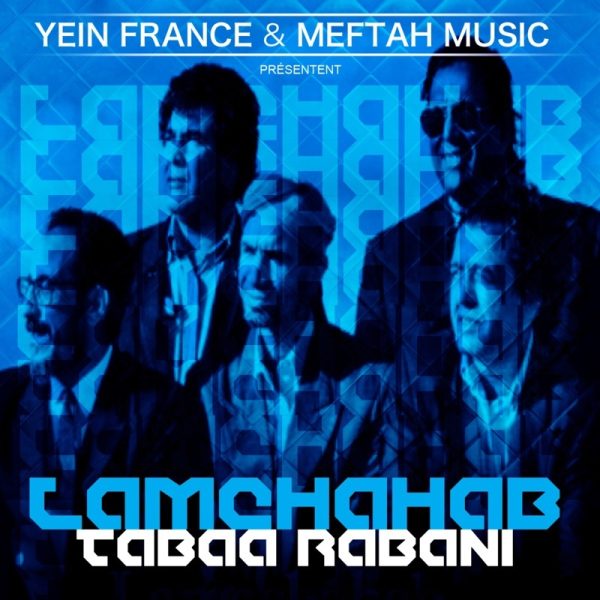
North Africa is home to a rich variety of folk music, and an equally rich tradition of modernizing and reinterpreting this heritage. In recent years, old Maghrebi music has made its way back to the dancefloor, with producers and DJs like Retro Cassetta, Guedra Guedra, Ammar 808, Disco Atlas, and even DJ Snake mining songs of the past with surprising and exciting results.
Among this artists, Aziz Konkrite is distinguished by his dedication to 45” singles from Morocco’s golden era of folk music in the ‘60s and ‘70s, when rural styles from across the country found new audiences in urban bars and record studios. An archivist and historian in addition to a music producer, Aziz released his 2023 album Siba Sawt System #1, the product of years spent crisscrossing Morocco to locate local studios, dig for old records and interview surviving artists from the country’s past.
Building on this knowledge, Aziz’s performance in Rabat last week acted as an introduction to the history of Moroccan music. Beginning with the driving bass rhythms of a Gnawa gimbri, the set took listeners on a tour of Maghrebi folk traditions from Reggada to Ahwach and Izlan. With this bewildering array of sounds, Konkrite’s Siba Sawt System seemed to tear a hole in the fabric of time. As he twisted and stretched samples of traditional Moroccan instruments like the reedy nay flute and the buzzy bendir hand drum, mixing them with chest-thumping synth riffs and four-on-the-floor techno beats, it became hard to tell which sounds were old and which were new. In Aziz’s hands, the past began to sound like the future.
Sporting a Che-style black beret on Wednesday night, Aziz’s retro-futurist populism was enhanced by sleek video production. Shot during research trips to Azzemour and Khenifra, the glitchy footage playing behind Aziz featured scenes familiar to anyone who has driven around rural Morocco: windy mountain roads, smiling teenage boys riding bikes, empty town squares. As he transitioned to the driving synth lead of “Kindir Surprise,” the monitors began to display images of local welders building the chasses for long-haul cargo trucks. The looping edits of intricate metal grills and flashing arrays of signal lights revealed surprising resonances between electronic dance music and this solidly working-class Moroccan trade. With this visual sequence, Aziz drew our attention to yet another overlooked aspect of the country’s artistic heritage.
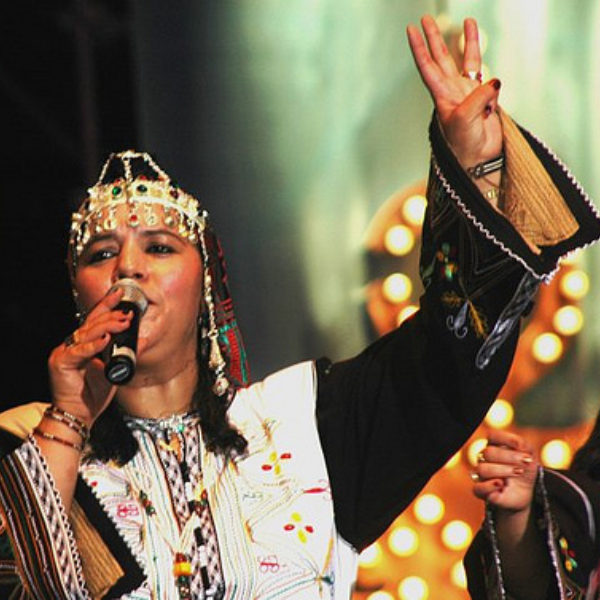
But the highlight of Aziz Konkrite’s nearly two-hour set came with an elaborate remix of his track “A Meli Melodie,” built around a vocal sample from the 1977 song “Leili a Leil” by Amazigh artists Benacer Oukhouya and Hedda Ouakki. Hailing from the rural Middle Atlas mountains, this duo became legendary for their residencies in Casablanca cabarets like “Riad Fes” and “La Terasse” throughout the ‘60s. With “A Meli Melodie,” Aziz reminded us that our ancestors loved to party just as much as we do, and he opened the track with a recorded dedication from Hedda herself, whom he had recently visited. Over a propulsive layer of booming snare drums, Konkrite introduced the song’s signature violin riff and Hedda’s plaintive, piercing voice singing “Leili a leil, ma jani na’as” [“Night oh night, I am not tired yet”] before gradually twisting the sample beyond recognition. As the pitch rose and the beat picked up, the song unexpectedly resolved into the familiar melody of Lil Wayne’s “A Milli.” The crowd, mostly composed of Rabat’s young creative types, went crazy and rapped along to Weezy’s first verse before settling back into “A Meli Melodie.” At the end of the track, Aziz faded out the electronic percussion and we were left with the raw sample of Hedda’s original voice, encouraging us to dance later into the night.
Aziz’s electronic music project is powerful precisely because it calls upon a deep archive of repressed cultural memory. The folk traditions he presents and reinterprets have withstood decades of assault, first from predatory French colonialism and lately from a rapacious neoliberal economy, which has hollowed out rural Moroccan communities. Cheikha Hedda Ouakki, who devoted her life to Moroccan popular music, is now living in obscure retirement in her home village in the Middle Atlas, traveling many hours along winding mountain roads to reach the nearest hospital for medical treatment. When Aziz names his project “Siba Sawt System” it is not merely a generalized punk gesture of rebellion; it is also a tribute to those artists of Blad al-Siba who have refused to be silent in the face of such brutal systems. On the dancefloor in Rabat last week, despite it all, Aziz kept the party going for one more night.


Related Audio Programs