






Afropop’s Sebastian Bouknight is back after a week in Morocco, where he was tuning into the local music scenes and checking out the offerings of the World Sacred Music Festival in Fes. This is the first of a series of posts about that trip. Check back soon for more from Morocco!
Of course, in just one week a visitor can only just scratch the surface of an entire nation. But even in that time, the fertility and complexity of Moroccan culture is unmistakable. Yes, everything the tourist literature says about the magnificent architecture, delicious food, stunningly varied landscapes and visible presence of an ornate history is true. But the rich reality of Morocco reaches far beyond the ornamented Almohad gates and sparkling Mediterranean beaches: the neighborhood soccer games; the newly minted, awe-inspiring Saharan solar farm; the locally made TV dramas; the weekly family visits to the ancient public baths (hammams); and the quickly rising suburbs with Burger King and Ikea. And, of course, that thing we’re particularly interested in: the music.
Morocco encompasses many, many worlds of music: Gnawa, Arabic pop, Amazigh ahwach, classical Andalusian melhoun, Issaoua rhythms, daqqa, raï, rap, chaabi, jazz and so much more. At the World Sacred Music Festival in Fes—which this year took the theme “Water and the Sacred”—we heard a rich spread of Moroccan pop, Amazigh (Berber) fusion, Gnawa and Sufi music, as well as artists from across the globe: China, France, Brazil, Mali, Kuwait, Egypt and Greece. We sat one night at the Rabat home of a respected Gnawa mâalem, heard abundant music wafting out of shops, cars and phones and even caught a set from Tobagonian singer Calypso Rose at the international Mawazine Festival in Rabat. We’ll tell the stories of all this music over a series of photo essays, playlists and interviews, but to begin, let’s focus in on the pop music.
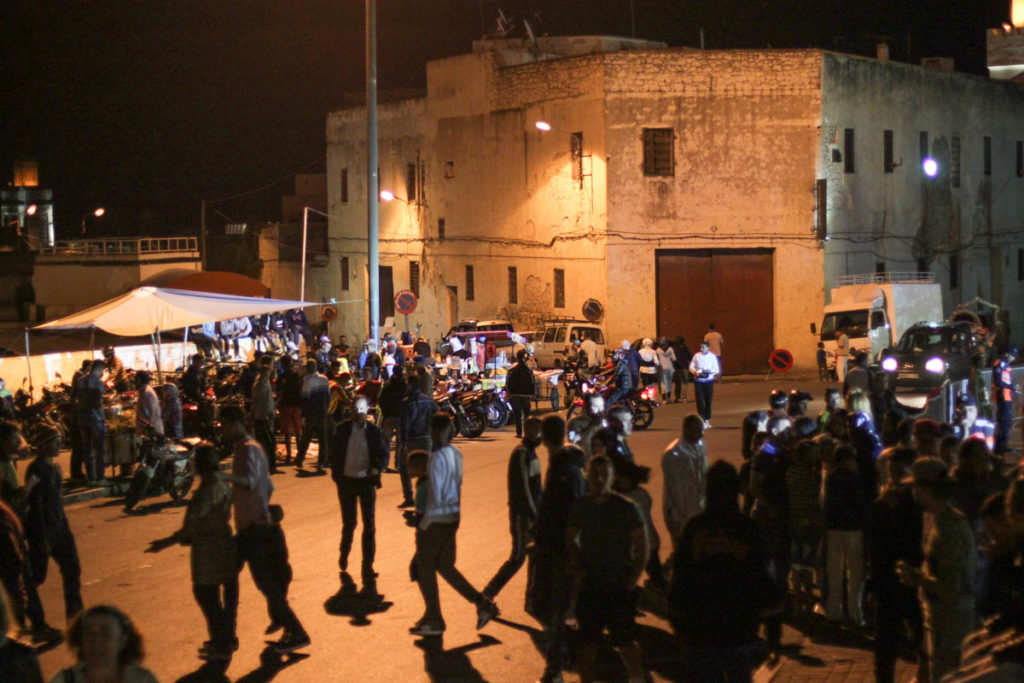 Fes at night: outside Place Boujloud
Every night, the festival hosted a free concert with popular Moroccan musicians in the sprawling Place Boujloud, just outside the famous blue gate into the old medina—Bab Boujloud. During these concerts, the square, encircled by old stone ramparts, was packed full, mostly with Fassis (Fes locals) and visiting Moroccans of all ages. Teens and millennials dominated the space while elders sat on the steps and kids ran around and climbed on barricades to get better views of the stage.
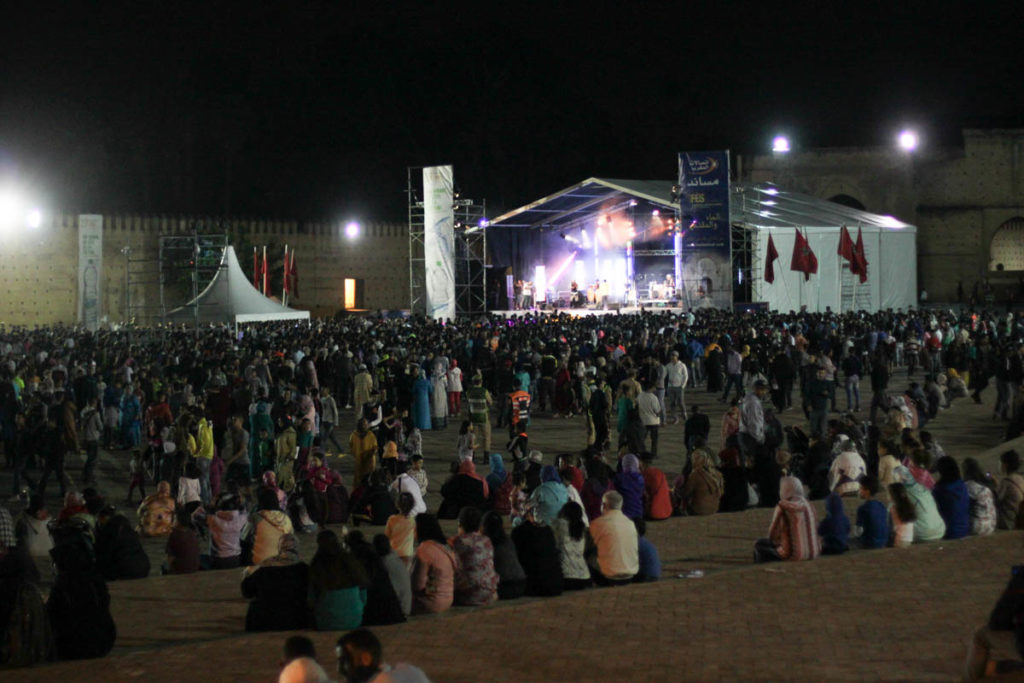 The stage at Place Boujloud
The lineup ranged widely from night to night: for example, Said Guissi of the Issaoua Sufi brotherhood; the crooning Cheb Rayan; the hip-hop/pop group Fnaïre; and a superstar of Gnawa music, Hamid El Kasri, who recently visited New York as part of the Gnawa Festival Tour. On a busy schedule, we were able to catch one of these performances: a double bill of Oussama Abdedayem and Fassi singer Nizar Idil.
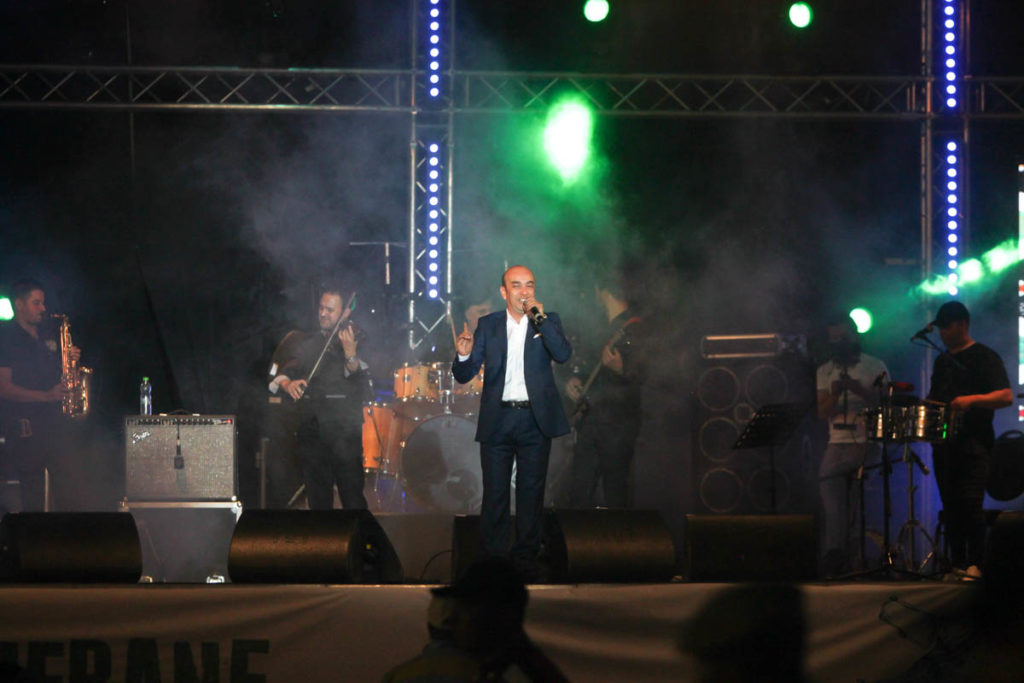 Oussama Abdedayem
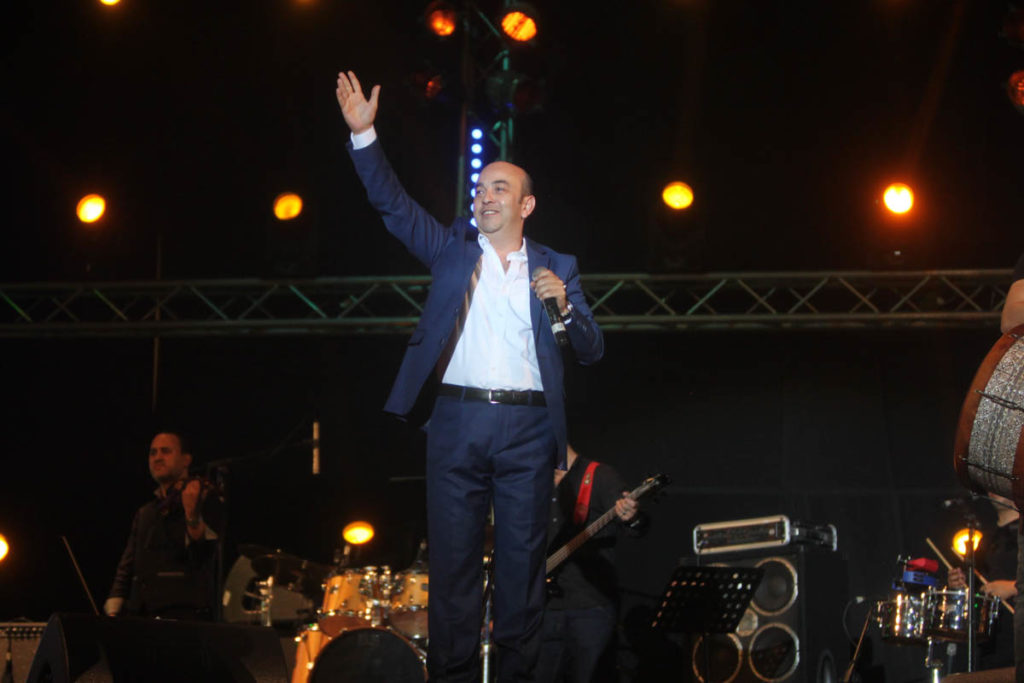
Both of these singers worked with a similar sound, backed by large bands anchored by bassists and assertive drummers (drumset, darbuka and congas), and colored by synth, violin, flute, guitar and saxophone. Although Abdedayem’s style was looser than Idil’s, his vocal gestures echoed the melismatic, mawwal solos of classical Arabic singers. His music blended the classic sound of Arabic pop with reggae upbeats and jammy djembe solos. Abdedayem sang about, among other things, love, God and Morocco (while draped in a Moroccan flag). Screens behind the singers showed images of slowly waving Moroccan flags on repeat, adding further patriotic weight to their songs of national pride.
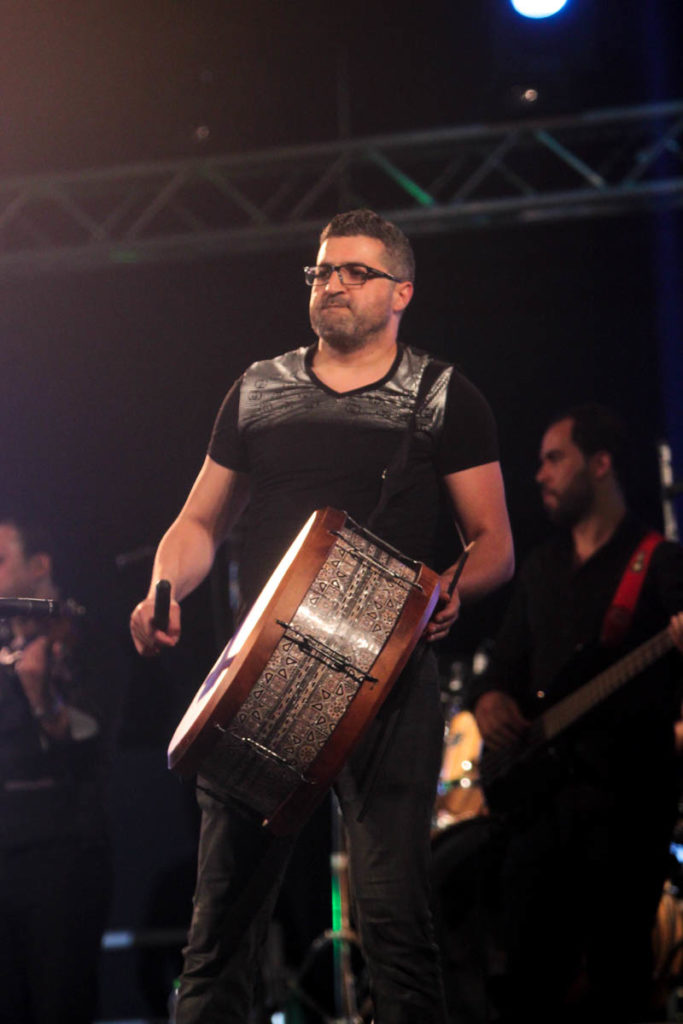 A drummer with Oussama Abdedayem
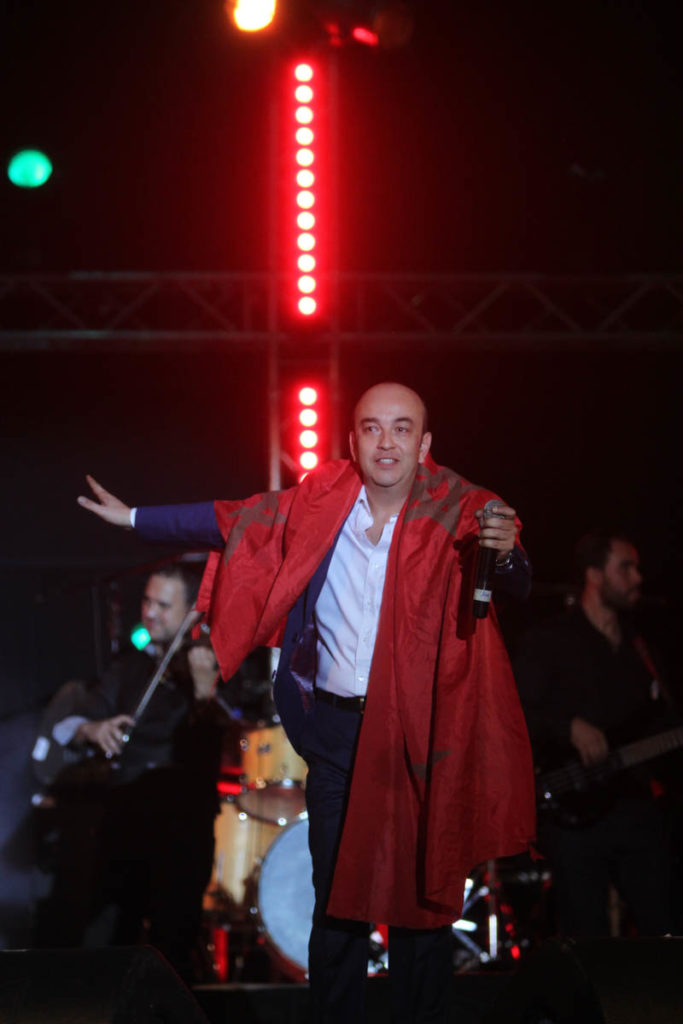 Oussama Abdedayem draped in a Moroccan flag
Nizar Idil is clearly a big hit in his hometown. His presentation is slicked back and rather syrupy, crooning songs of love with a smile. Although there were times when his voice could have benefited from some post-production polish, he led his band with high energy, serenading the crowd and getting them dancing. The crowds, well acquainted with the music of both of the singers, joined in loudly on all of the choruses.
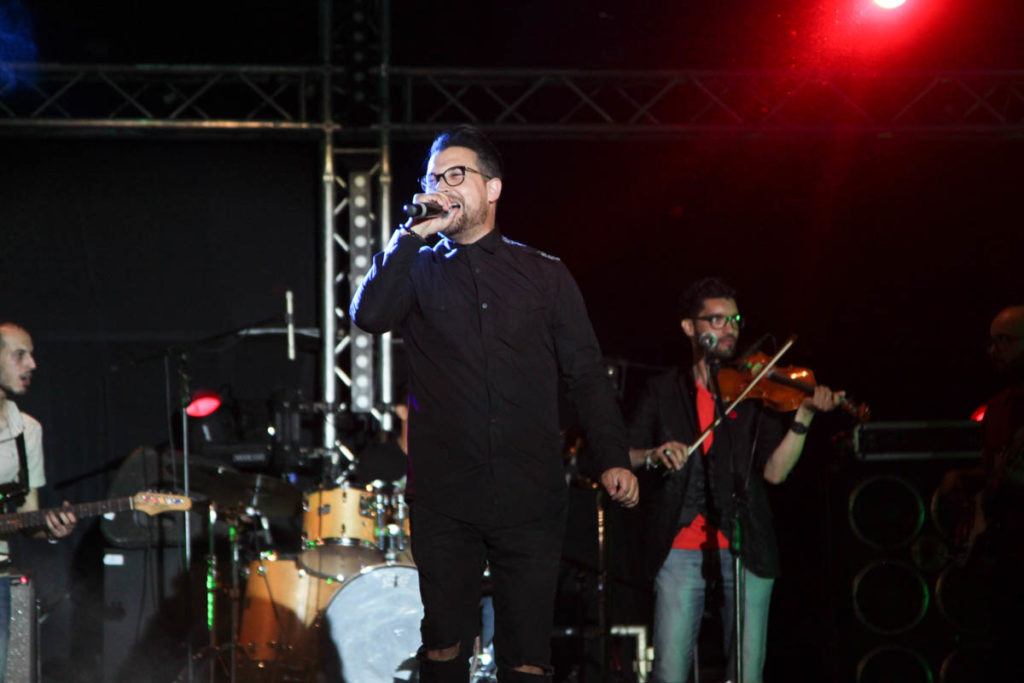 Nizar Idil
This track, “Tah 3la Raso” by Nizar Idil, got a lot of love: