






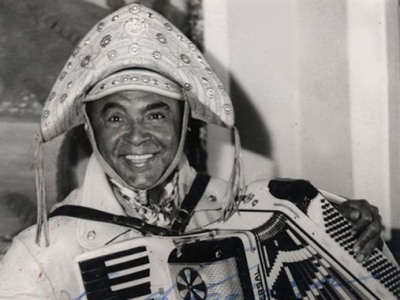
For our program on Luiz Gonzaga, we chatted with Megwen Loveless who has a PhD in Social Anthropology at Harvard University. She wrote her dissertation on forró music and dance, and teaches Portuguese.
What IS forró?
Megwen Loveless: A relatively recent cultural phenomenon (dating from the mid-twentieth century), forró music arose in the Brazilian northeast sertão (roughly translated as "desert backlands") and has since developed into a national treasure of folkloric tradition. Like other young Brazilian musics, it is constantly evolving, though a traditional base line has been conserved by several roots bands - it is this traditional music, called forró pé-de-serra, that Luiz Gonzaga molded and marketed into a popular Brazilian genre.
The pé-de-serra style is generally played by three-piece bands including an accordion, a triangle, and a double-headed bass drum called the "zabumba." (The name of the instrument closely matches the sound made by the drum: za-BOOM-bah!) What is so alluring about this music is the combination of African, Amerindian, and European influences: a basically Western melody line coupled with the wildly syncopated two-tone drum notes gets even the gringos up and dancing!
Related Audio Programs